Published: Monday, October 6 2025
Last updated: Tuesday, October 14 2025
What AI in Therapy Will Never Do (and Why That Matters)
Written by: Wes Knepper, LCMHC, MHA
The world of artificial intelligence is expanding at a dizzying pace, and with it, the conversation around its role in healthcare, and perhaps especially in mental health. For many, the idea of AI in therapy conjures images of emotionless robots dispensing advice, or worse, replacing the deeply human connection central to healing.
At SonderMind, we understand these concerns, and we're here to demystify what AI in mental health care and therapy truly means, what it can offer, and crucially, what it will never do.
Spoiler alert: It’s not here to replace therapists. If anything, it’s highlighted exactly why the work they’re doing is truly irreplaceable.
The uniquely human core of therapy
One of the most fundamental concerns about AI in therapy centers on its inability to convey genuine human empathy and lived experience. And on this, we wholeheartedly agree: AI cannot replicate the nuances and complexities of the therapeutic relationship.
Our human relationships—whether with friends, family, or partners—are rich because we harbor complex and often overlapping feelings. We can deeply love someone while simultaneously being irritated by them, without diminishing either emotion. This intricate tapestry of feelings is what makes our relationships so profound, and it's also why many seek therapy—to navigate the complications that arise.
AI, in contrast, is always patient, always responsive, and always available. While these qualities have their place, they fundamentally fall short when it comes to the most impactful aspects of therapeutic relationships. Some of the strongest therapeutic bonds are forged through "rupture and repair." This occurs when a human therapist, by their very imperfection, creates an issue that temporarily strains the relationship. The opportunity to resolve this issue in a healthy way, within the context of a trusted relationship, builds skills that translate directly into a client's daily life.
Almost everyone wants help managing relationships with other humans. Very few people come to therapy asking for help with their AI relationships.
No real-world human relationship is as polished as an AI interaction, and it's through working through these imperfections with another human that the most significant breakthroughs occur.
The absence of genuine human empathy, intuition, and the capacity for shared, imperfect experience in AI systems profoundly impacts the therapeutic alliance and patient outcomes. AI cannot replicate the dynamic co-creation between therapist and patient that enables deep, personalized understanding and the crucial process of rupture and repair.
Data privacy and confidentiality when using AI for mental health care
Ethical concerns are paramount when discussing AI in clinical settings, with data privacy and patient confidentiality at the forefront. These technologies are new, and for clients to truly consent to their use, they must understand them. This places providers in a challenging position, as they are obligated to explain these novel technologies in a clear and understandable way.
At SonderMind, this is why we have invested heavily in robust training for our providers, along with developing tools and resources related to any AI applications we build. Crucially, our providers are deeply involved in the creation of our clinical tools and resources. This collaborative approach ensures that ethical considerations, particularly regarding consent and data security, are integrated into the development process from the outset, rather than being added as an afterthought.
Lastly, a core principle for us is no data monetization. This means we do not and will not sell client data or use it for third-party advertising. Your information and that of our providers are completely protected. We also ensure full transparency: you'll always know if you're interacting with an AI or a human. When it comes to your data, we give you control by requiring your explicit consent for session recordings, allowing you to opt out at any time. And you can request data deletion at any time, no questions asked.
The irreplaceable human touch
Beyond factual clinical knowledge, licensed therapists bring a unique set of human skills to a session that AI simply cannot replicate:
- Physical presence and non-verbal cues: Being in a physical space with another human being (even if the session is conducted virtually) allows for the observation and mirroring of body language, as well as a responsive interaction that AI cannot replicate.
- The power of imperfection: As mentioned, AI is, in some ways, "too perfect." It doesn't "mess up" and allow those imperfections to turn into robust clinical discussions. The shared humanity and the ability to work through real-world challenges with an imperfect human are where true breakthroughs happen.
- Intuition and deep personalization: A human therapist adapts their approach based on intuition and a deep, personalized understanding of the patient, a far cry from AI's purely data-driven approach. This intuitive understanding enables nuanced responses and tailored interventions that surpass the limitations of algorithms.
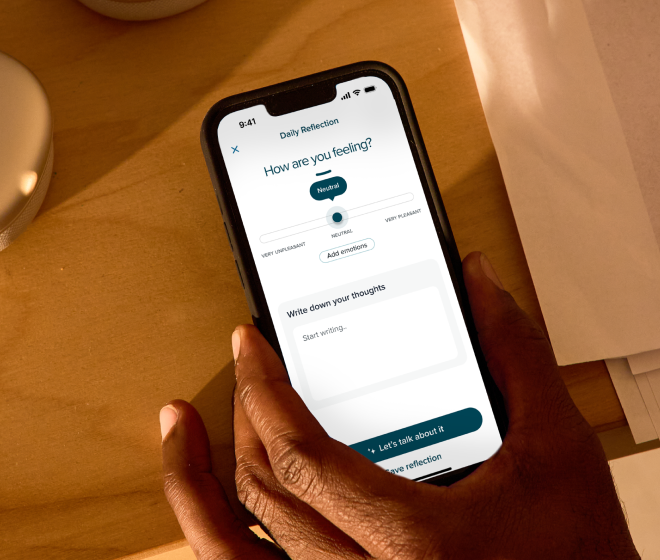
Our view of the optimal relationship between AI and human therapists is clear: Humans lead care and provide the main therapeutic intervention, while AI serves as a powerful supplement before, between, and after sessions.
Effective therapy is built on the therapeutic alliance
The strength of the therapeutic alliance directly correlates with patient outcomes and adherence to treatment plans. At its essence, therapy is built on trust. A client must first trust that therapy can help them, then trust that the individual therapist they meet with can help them achieve their goals. This trust blossoms from providers who are well-trained to develop a genuine bond with clients. The degree to which a provider and client can partner to develop shared goals and utilize the provider's expertise to create a path for the client to experience relief from whatever brought them to therapy in the first place is the true measure of success.
The process of rupture and repair of the therapeutic relationship, where both therapist and client navigate challenges and emerge stronger, is one of the best predictors of a long-term, impactful relationship with a therapeutic provider. This is a profoundly human process, one that speaks to the core of what makes therapy transformative.
Misconceptions about AI in mental health care
Perhaps the biggest misconception we encounter about AI in therapy, both from the public and within the healthcare industry, is the idea that therapists who use AI tools have surrendered their expertise or have been somehow diminished.
AI should always enhance a therapist's capacity and should never diminish the critical impact of a provider's training and expertise in delivering care. Our goal at SonderMind is to supplement the critical work of mental health care providers by equipping them with innovative tools that streamline workflows and ultimately improve the lives of their clients.
Our AI constitution ensures that:
- AI is used with patient consent: A client's data is only ever used with their explicit, informed consent.
- Data is anonymized and secured: All data is handled with the highest level of security and privacy, and personally identifiable information is never used to train or operate the AI models.
- The AI is explainable: The reasoning behind any AI-driven insight or suggestion is transparent and understandable to both the provider and the client.
- Human oversight is mandatory: AI tools serve as a support system, with final decisions and therapeutic actions resting firmly in the hands of a licensed human therapist.
In a future where AI is more prevalent, human therapists will need to evolve their skills to maintain their relevance and value. This primarily involves learning how to effectively leverage AI tools to support clients between sessions and to help build robust discharge plans that enable clients to maintain the gains from therapy in the long term.
These tools are new, and traditional training has not prepared therapists for their integration. This is precisely why SonderMind works so closely with our providers to develop these tools collaboratively. As the tools are being developed, our providers are simultaneously gaining the expertise necessary to use them effectively and ethically.
Our pledge at SonderMind
At SonderMind, we believe in the power of human connection in therapy. We are committed to developing AI solutions that augment, rather than replace, the invaluable work of licensed therapists and psychiatrists.
We're dedicated to ensuring that AI enhances, but never replaces, the core of therapy: human empathy, lived experience, and the unique connection between a therapist and client. Our commitment to your privacy, confidentiality, and informed consent is a fundamental part of our AI constitution.
Our focus is on empowering therapists to deliver the highest quality of care, ensuring that the future of mental healthcare remains deeply human-centered, supported by the intentional applications of AI in therapy.
This work is important, this work is hard, and it is worth doing extremely well. AI has the chance to make a therapist’s work less hard, to help them do it extremely well, but never to reduce the importance of that work.
6 Sources
- Retrieved from https://www.sondermind.com/resources/articles-and-content/how-to-rebuild-trust-in-a-relationship/
- Retrieved from https://www.sondermind.com/resources/articles-and-content/7-tips-for-building-a-strong-relationship-with-your-therapist
- Retrieved from https://www.sondermind.com/resources/articles-and-content/what-if-you-and-your-therapist-disagree/
- Retrieved from https://www.sondermind.com/resources/articles-and-content/transference/
- Retrieved from https://www.sondermind.com/resources/announcement/mental-health-providers-gain-90-minutes-a-day-with-sonder-mind-ai-tool
- Retrieved from https://www.sondermind.com/resources/articles-and-content/what-to-do-in-between-therapy-sessions/